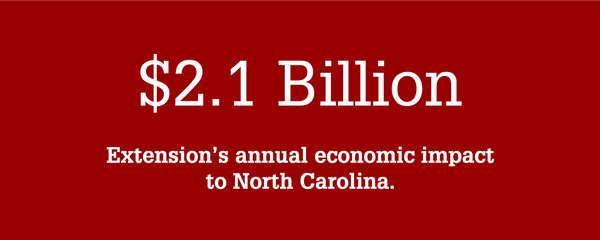
NC State Extension generates more than $2 billion in annual economic impact for North Carolina by turning research into real-world results. Our experts help communities thrive — from farms to families, from the mountains to the coast, and everywhere in between.
Page Menu
Featured Resources
Extension Annual Report
Extension Annual Report 2025 (Accessible PDF)
Extension Annual Impact Fact Sheet
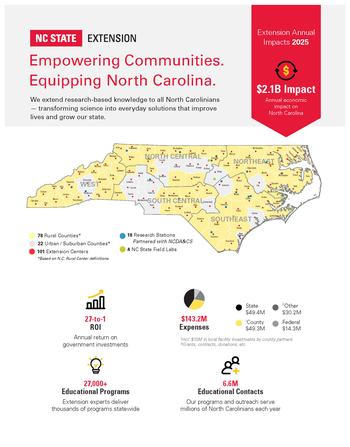
Annual Impact Handout 2025 (Accessible PDF)
Extension Annual Expenses
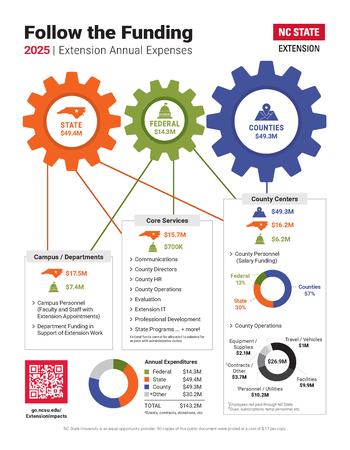
Annual Expenses Handout 2025 (Accessible PDF)
Extension Impact Study
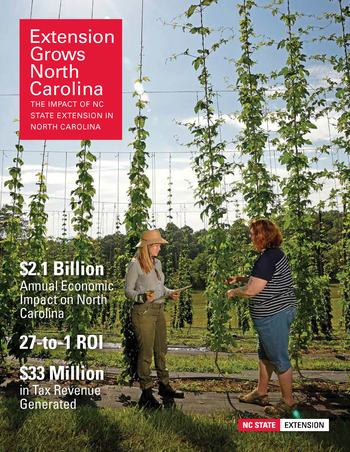
Extension Impact Handout (Accessible PDF)
4-H Annual Report

Key Facts and Figures
Extension is the largest non-formal educational outreach organization in the 17-campus UNC system.
- 101 local centers (including every county and the Qualla Boundary)
- 1,288 Extension professionals
- 760 based in local centers
- 528 based on campus and at other facilities
- 11M annual visitors to Extension websites
- 27,000+ educational programs
- $11M+ annual gifts plus county investments in infrastructure enhancements
- 6.6M educational contacts engaged in our programs
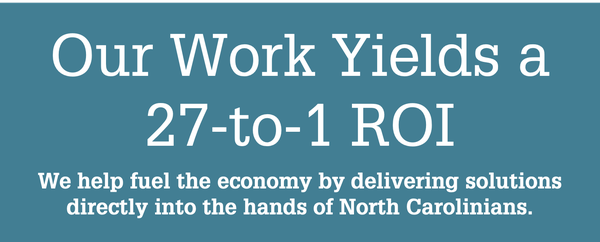
Extension’s economic and functional impacts on the state are significant, with returns on Extension programming eclipsing the cost of operations many times over.
- $2.1B annual economic impact
- 27-to-1 return on annual government investments
- $36M+ in annual tax revenue generated
Many dedicated volunteers play a key role in supporting our programs, helping to address local needs and enhance our impact.
- Extension volunteers contribute more than $17 million worth of time and services annually (source: Independent Sector)
AGRICULTURE |
FOOD & NUTRITION |
4-H YOUTH DEVELOPMENT |
|
Extension drives growth and innovation in our $100B+ ag industry through research-based solutions for producers. |
Extension strengthens community health through science-backed education in nutrition, food safety and local foods. |
Extension’s 4-H program builds leadership and career-ready skills in hundreds of thousands of youth statewide. |
|
4,804 educational programs delivered 1.4M contacts generated by programs 130,000 producers reached with research-based guidance |
5,442 educational programs delivered 830,196 contacts generated by programs 150,000 people strengthened family financial stability |
15,419 educational programs delivered 273,016 youth participated in 4-H activities 24,000 youth increased their college and workforce readiness |



CALS Impacts
CALS Annual Impact Report
CALS By the Numbers
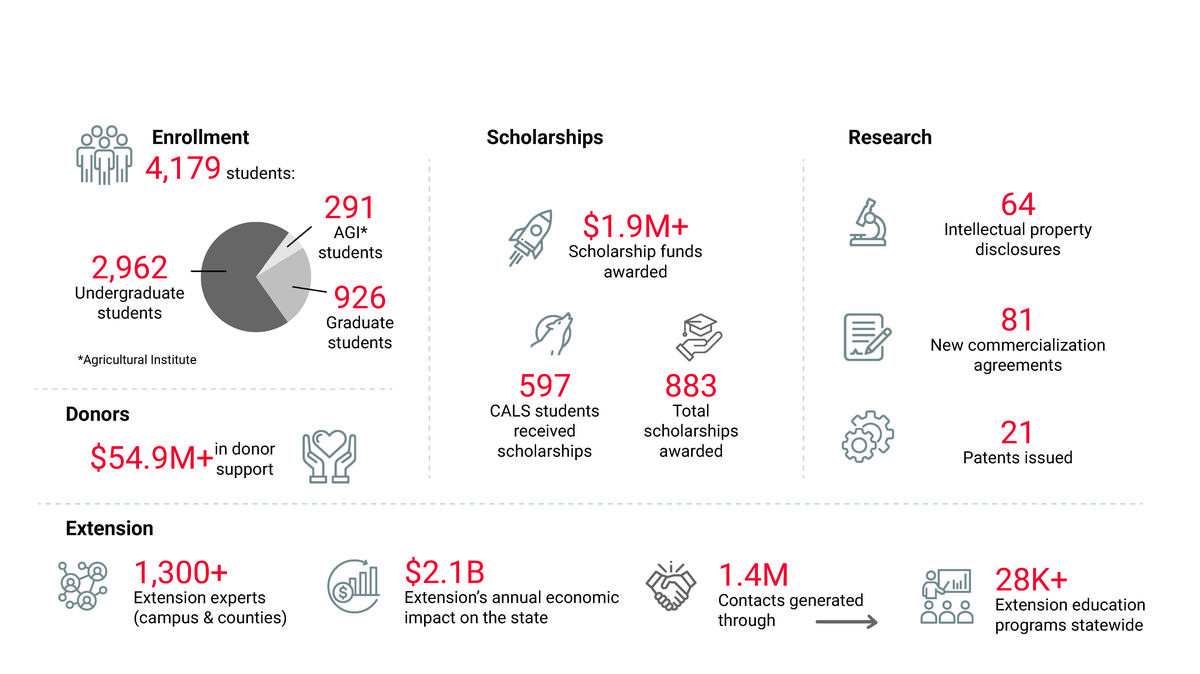
CALS By the Numbers 2024-25 (Accessible PDF)
N.C. Agriculture Overview
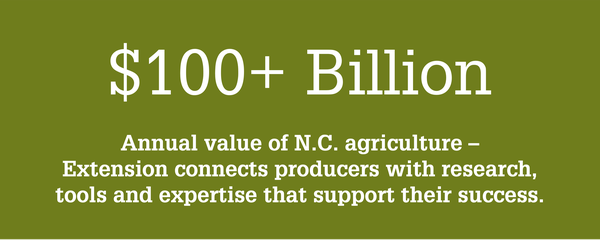
Agriculture is North Carolina’s leading industry, generating more than $100 billion annually while supporting over 1 million jobs across the state.
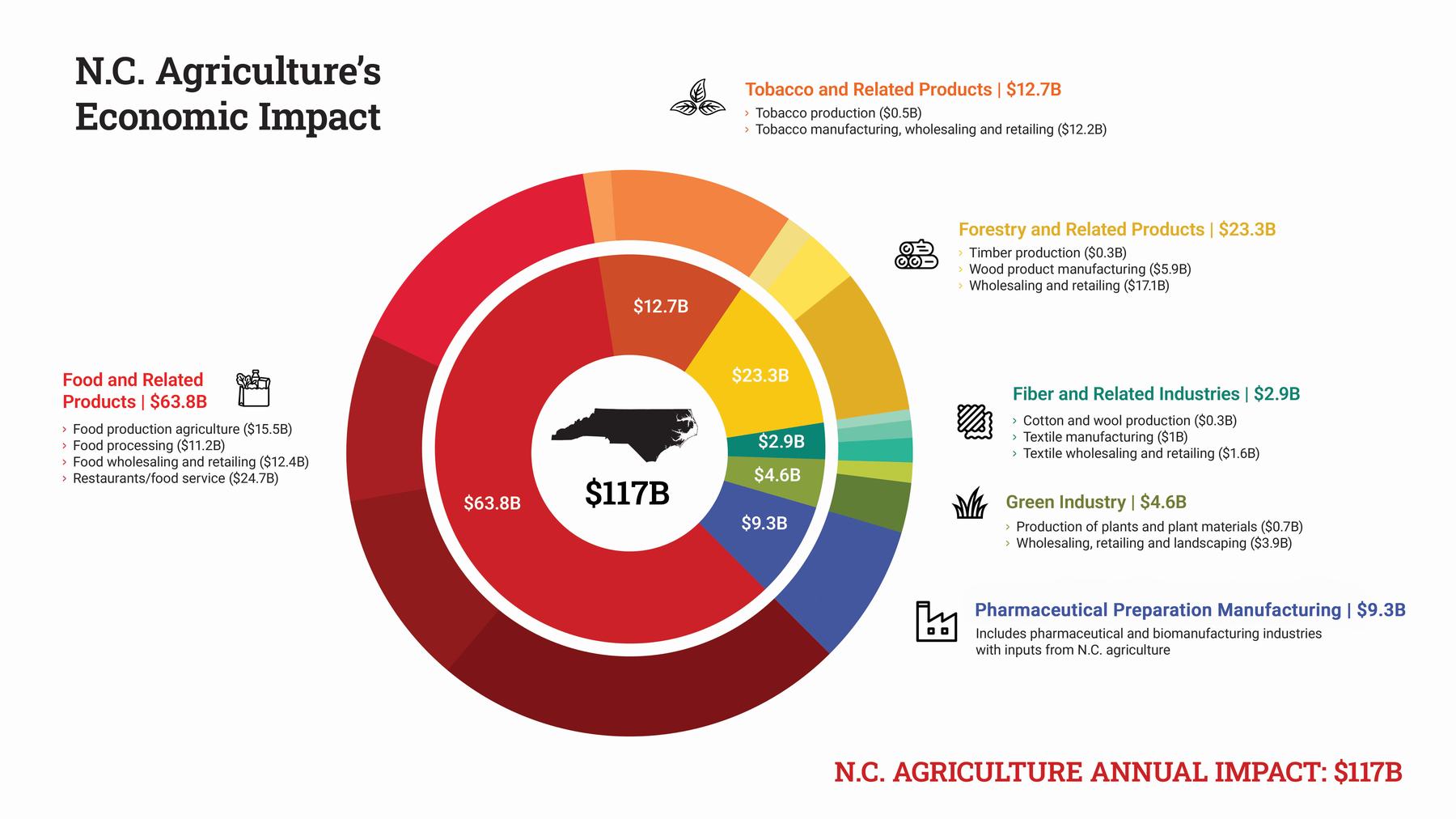
North Carolina boasts the nation’s third most diverse agriculture economy, producing over 80 commercial crops alongside a thriving animal agriculture sector that makes up 70% of total farm sales.
N.C. Agriculture by the Numbers
- 41,300 farms across more than 8 million acres
- 1,092,000 agriculture-supported jobs
- #1 in U.S. for sweet potatoes, tobacco and poultry/egg sales
- #9 overall in total farm sales
- #6 in livestock
- #19 in crops
Annual N.C. Agricultural Statistics (NCDA&CS)
County Agriculture Profiles (Infographics)
Explore how agriculture shapes local economies in every North Carolina county. These easy-to-read profiles highlight key data and trends — from farm income to job impacts — and show how agriculture supports resilient communities and statewide growth.
Sources:
2022 Census of Agriculture – USDA-NASS (North Carolina | Counties)
N.C. Agriculture Economic Impact (NC State)
N.C. Agricultural Statistics (USDA-NASS)
A Strong Research Foundation
Extension may have a vast footprint across the state, with 101 local centers spread across every county and 18 agricultural research stations covering close to 20,000 acres, but the knowledge and resources we share start with sound science.
The College of Agriculture and Life Sciences at NC State has emerged at the forefront of using data science, AI and innovative technologies to improve agriculture. CALS casts a wide research net, with ~$130 million in annual expenditures supporting 600 active projects that explore more than 70 different commodities.
CALS research highlights from 2025:
- 29 new plant varieties released
- 81 commercialization agreements executed for CALS IP (plants, materials, etc.)
- $109M+ in contracts and grants awarded
- 1,000+ peer-reviewed research publications published
As research rapidly enhances our knowledge of plants, soils and animals, Extension connects communities across the state with practical scientific solutions that help them succeed.
Research Impact Resources
- CALS Research Annual Impact Handout
- Learn how CALS research provides the scientific foundation for Extension programs.
- Research Works
- Discover how NC State puts research to work in North Carolina and beyond.
BEST AGRICULTURAL SCIENCES UNIVERSITIES
U.S. News & World ReportBEST AGRICULTURE & FORESTRY UNIVERSITIES
QSMore Resources
- CALS Research + Extension Impact 2025
- Extension Impact Study | TEConomy Partners
- 2030 Strategic Plan | NC State Extension
- USDA-NIFA Federal Report of Accomplishments | CALS 2023-24
- CALS Impact Report 2025
- NC State University | Rankings and Facts
Employees can visit the Impacts section of the Brand Site for more resources.