Tunnels and more tunnels everywhere you turn, under your shrubs or out in your yard, what can be done? Do you have any ideas as to the cause of this phenomenon? If you guessed a mole you may only be half right. Quite often a little animal call a vole follows along behind the secretive and seclusive mole. Moles and voles are not at all alike except in a few of their habits. The steps that need to be taken to remove these two animals from the area are totally different and so proper identification is critical to attain control of the situation. Notice I use the word control; the reason is that if they can be kept in balance with the surrounding environment they do have several purposes. MOLES & VOLES
MOLES
VOLES
Description of Voles
Voles are small rodents that live in field and shrub habitats. In North Carolina the two species of voles causing the most damage are the pine vole and meadow vole. Meadow voles are the largest of the two, but both have smaller eyes and ears when compared with a mouse. Pine voles have tails about the same length as the hind foot, while the tail of a meadow vole is about twice as long as the hind foot. They range in length from 3 to 5 inches and are gray to brown.
In the wild, voles forage on native vegetation and provide a valuable food source for predators such as weasels, hawks, and snakes. In flower and shrub plantings or home orchards, however, voles can cause damage by eating flower bulbs, girdling the stems of woody plants, and gnawing roots. Plants not killed outright may be invaded by diseases or die from water stress during drought periods. Voles cause moderate to severe damage in home landscapes and gardens in about 90 percent of North Carolina.
Meadow voles breed year-round and do most of their damage to roots during the winter. They prefer green vegetation and dropped fruit but will feed on bark during the winter or when populations are high. They also feed on shrub roots and flower bulbs. Meadow voles dwell mainly above ground, especially in grassy or weedy areas. Pine voles burrow underground and make tunnels where they feed on trees and plantings below the ground. But both types of voles will usually occupy the mole tunnels. One simple way to tell if you have voles is to look for small golfball size holes around the tunnels. Moles only exit the tunnels one time a year and do not dig these exit holes. back to the list
Vulnerable Plants
- fruit trees
- flower bulbs
- daylilies and other perennials
- garden vegetables and fruits
- shrubs and ornamentals
Typically, meadow voles girdle young trees, shrubs, and saplings at the ground line. Close inspection of the damage will reveal paired 1/16 inch wide grooves left by their chisel-like teeth. (Rabbits also chew on young trees, but the girdling begins several inches above the soil line.) Meadow voles do not make tunnels, but faint trails and small piles of droppings may be found in grass clippings or tall grass.Pine voles may sever the trunks of small trees or shrubs from the roots, making it possible to pull the top of the plant out of the soil. Upon close inspection of the plant, gnawing marks can be seen just under the soil line. Similar damage to perennials can reduce a seemingly healthy, green vigorous clump to a pile of wilted leaves and stems in a very short time. Careful observation of the area near the damaged plant may reveal piles of earth (3 to 4 inches wide) and tunnels that are about 1-1/2 inches in diameter. If the pine voles are living under a tree, a network of tunnels approximately 3 inches under the soil can be located by probing with a 1/2 to 3/4 inch diameter stick or rod.
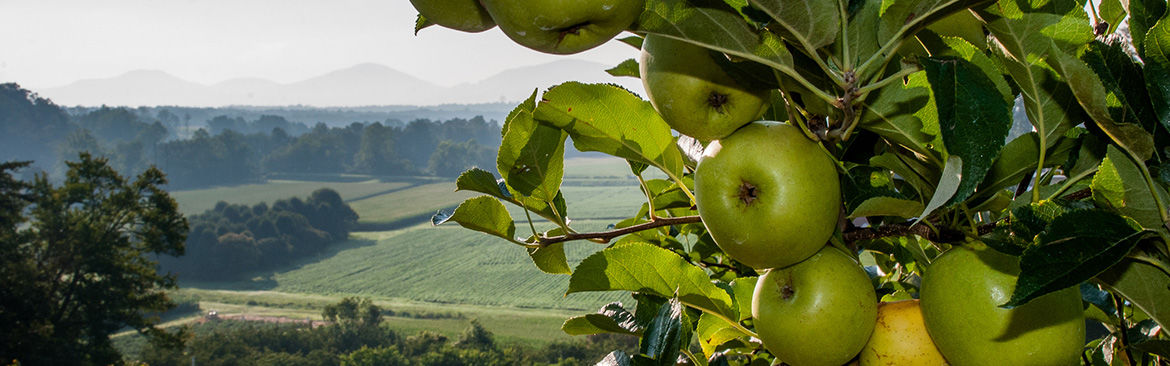
Voles are a different story from moles; voles are considered a pest when they enter into horticultural areas. An example of a horticultural area is a landscape. Trapping voles is allowed, but not the trapping of moles, so you want to be sure which you have. Use the apple sign test to determine if voles are causing the problem in your yard or orchard. Use control methods if voles are present. Vole Control Options
At this moment there no pesticides available for use on voles in North Carolina, but other methods of lethal control can be used. One of the most common controls used on voles are snap-type mouse traps. Careful and routine application of the apple sign test will reveal the locations of vole activity. Traps should be applied only in those areas. They are set down into the tunnels(runs) leaving a hole above them so that they may be checked daily. Cover the hole above the trap with some type of material, such as a flower pot.
Repeat the apple sign test a month after control measures have been taken. Make the test at least twice each year, once in the fall and once in the early spring.
After successful treatment, meadow voles can be discouraged from repopulating the area by close mowing and reducing or removing grass thatch. Nonlethal measures that are effective against pine voles involve setting up wire guards around plants you wish to protect. Remember the pine voles feed underground so the bottom of the 1/4 inch mesh wire fence must be placed 6 inches below ground and extend 18 to 24 inches above ground.back to the list
Description of Moles
Moles are a very shy animal. Three species are found in North Carolina: the eastern mole, the hairy-tailed mole and the star-nosed mole. All are similar in general appearance. The head has a long, tapering snout; lacks external ears; and has small, barely noticeable eyes. Moles have a short neck, and muscular forelegs support broad, heavily clawed feet. They are dark gray to black and range in length from 5 to 8 inches.
Moles are harmless to people or pets. The mole's diet is almost entirely animal, including earthworms, white grubs, ants, beetles and other subterranean insects. A mole will eat almost its own weight in food daily and in the process tunnel up to 15 feet per hour. The tunnels moles dig as they search for food can harm a young plant's root system. These tunnels are seldom reused by the mole, so a large network of the raised tunnels dug by one or two moles can ruin a lawn's appearance over time. More harmful voles sometimes move into mole tunnels and proceed to further damage plants. Moles are active all year round.back to the list
Vulnerable Plants
Any young seedlings or transplants are especially vulnerable. If voles move in to the mole tunnels, an even greater variety of plants will become affected.back to the list
Mole Control Options
All moles are classified as wild, nongame animals under North Carolina laws. No hunting or trapping seasons are set up for these animals, and they are subject to all applicable state laws and regulations. This means you can not kill a mole without requesting and receiving a permit from the North Carolina Wildlife Resources Commission. The reason is that several species of moles are becoming dangerously low in numbers, so the NCWRC moved to protect all mole species.
Moles can be difficult to eradicate. Because moles are solitary creatures, you probably have only one or two. One way to help control moles is to take the nonlethal approach. This means that their food source must be reduced and as stated earlier this includes white grubs, beetles and earthworms. The one easiest to control are grubs, this can be done applying insecticides to your lawn.
Individuals who use agricultural chemicals are responsible for ensuring that the intended use complies with current regulations and conforms to the product label. Be sure to obtain current information about usage regulations and examine a current product label before applying any chemical. Contact your County Cooperative Extension Service agent if you would like assistance.back to the list
Information for this article taken from North Carolina Cooperative Extension Service publication AG-472- 3,"Wildlife Damage Management: Voles in Horticultural Plantings" prepared by Peter T. Bromley, William T. Sullivan, Jr., & Michael L. Parker.
Mark Blevins, Horticulture Agent
http://www.ces.ncsu.edu/gaston/