

Perry-Winkle Farm
go.ncsu.edu/readext?177724
en Español / em Português
El inglés es el idioma de control de esta página. En la medida en que haya algún conflicto entre la traducción al inglés y la traducción, el inglés prevalece.
Al hacer clic en el enlace de traducción se activa un servicio de traducción gratuito para convertir la página al español. Al igual que con cualquier traducción por Internet, la conversión no es sensible al contexto y puede que no traduzca el texto en su significado original. NC State Extension no garantiza la exactitud del texto traducido. Por favor, tenga en cuenta que algunas aplicaciones y/o servicios pueden no funcionar como se espera cuando se traducen.
Português
Inglês é o idioma de controle desta página. Na medida que haja algum conflito entre o texto original em Inglês e a tradução, o Inglês prevalece.
Ao clicar no link de tradução, um serviço gratuito de tradução será ativado para converter a página para o Português. Como em qualquer tradução pela internet, a conversão não é sensivel ao contexto e pode não ocorrer a tradução para o significado orginal. O serviço de Extensão da Carolina do Norte (NC State Extension) não garante a exatidão do texto traduzido. Por favor, observe que algumas funções ou serviços podem não funcionar como esperado após a tradução.
English
English is the controlling language of this page. To the extent there is any conflict between the English text and the translation, English controls.
Clicking on the translation link activates a free translation service to convert the page to Spanish. As with any Internet translation, the conversion is not context-sensitive and may not translate the text to its original meaning. NC State Extension does not guarantee the accuracy of the translated text. Please note that some applications and/or services may not function as expected when translated.
Collapse ▲Photos and text by Debbie Roos, Agricultural Extension Agent.
Overview: The Big Picture
|
Page 1
|
||||
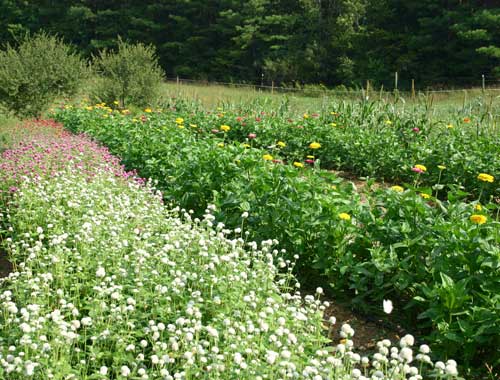
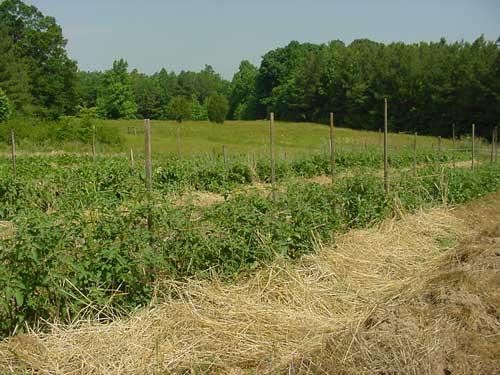
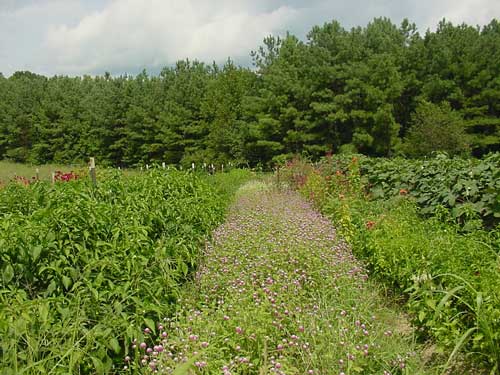
At Perry-winkle Farm, diversity is the name of the game. Every bed is usually planted in a different crop – flowers often alternate with vegetables, herbs, and cover crops. This mid-September view of the farm shows, from left to right, white and purple Gomphrena, mixed zinnias, and a millet cover crop.
Cathy and Mike grow about 240 different varieties of vegetables and cut flowers, plus warm- and cool-season cover crops.
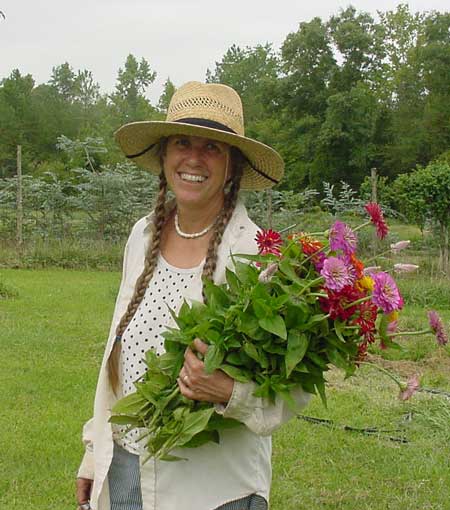
Cathy with an armful of freshly cut zinnias. Zinnias are one of Cathy’s “workhorse” varieties – always dependable and spectacular. Cut flowers are one of the most profitable crops grown at the farm and they grow about 120 different varieties. They sell both growers’ bunches (all of the same variety) and mixed bouquets. They sell their flowers at the farmers’ markets, to restaurants, and for many special events, including weddings.
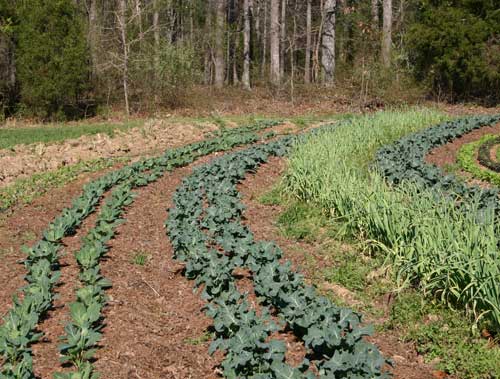
Early April view of mulched cool-season vegetable crops – from left to right, collards, broccoli, garlic, broccoli, and lettuce. Cathy and Mike sell at the farmers’ markets from March through December and aim to have a diversity of crops to harvest 9-10 months of the year!
next page
|
Page 1
|
||||