Fiber hemp is a promising industry for North Carolina, but collaboration will be key to overcoming challenges that could stand in the way. NC State Extension and the N.C. Plant Sciences Initiative are working to build those partnerships.
Turning to Fiber Hemp to Revitalize Agriculture and Textiles
(Updated: Oct. 9, 2026, 10:55 a.m.)
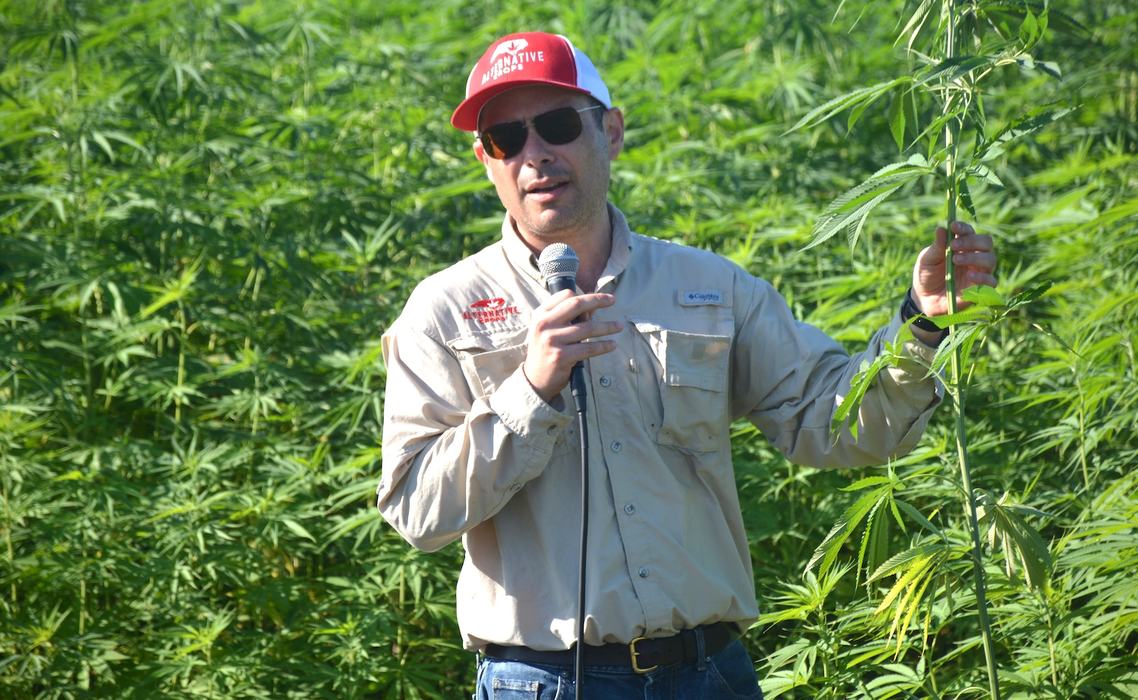
NC State Extension alternative crops specialist David Suchoff discusses the challenges of growing hemp during the Discover NC Textile Hemp field day held Aug. 7 at the Cherry Research Station in Goldsboro. (Photo by John Hart)
[View the original article by John Hart at CALS News.]
Both textiles and farming are woven deeply in the history of North Carolina. However, in recent years, both have faced challenges. Efforts are in place to revitalize these important industries, in part by growing hemp that can be locally made into fabric and other fiber-based goods.
Following the end of the Civil War, the textile industry took off in North Carolina. In 1899, North Carolina State University began a textile education program that taught students how to spin yarn and to design, weave and dye cloth. NC State University was also a leader in developing technology to improve and modernize textile mills. By 1923, North Carolina had surpassed Massachusetts to become the top textile producer in the United States.
But in the final decades of the 20th century, mills and factories began to close due to imports, outsourcing and foreign competition. Hope remains, though, that North Carolina will once again be a vibrant textile-producing state.
That’s where the National Science Foundation’s Textile Innovation Engine of North Carolina comes into play. A cooperative effort between NC State University, its Wilson College of Textiles, Western Piedmont Community College, Manufacturing Solutions Center, Gaston Textile Technology Center, NCIdea and the N.C. Department of Commerce, the Textile Innovation Engine is committed to revitalizing the state’s textiles industry.
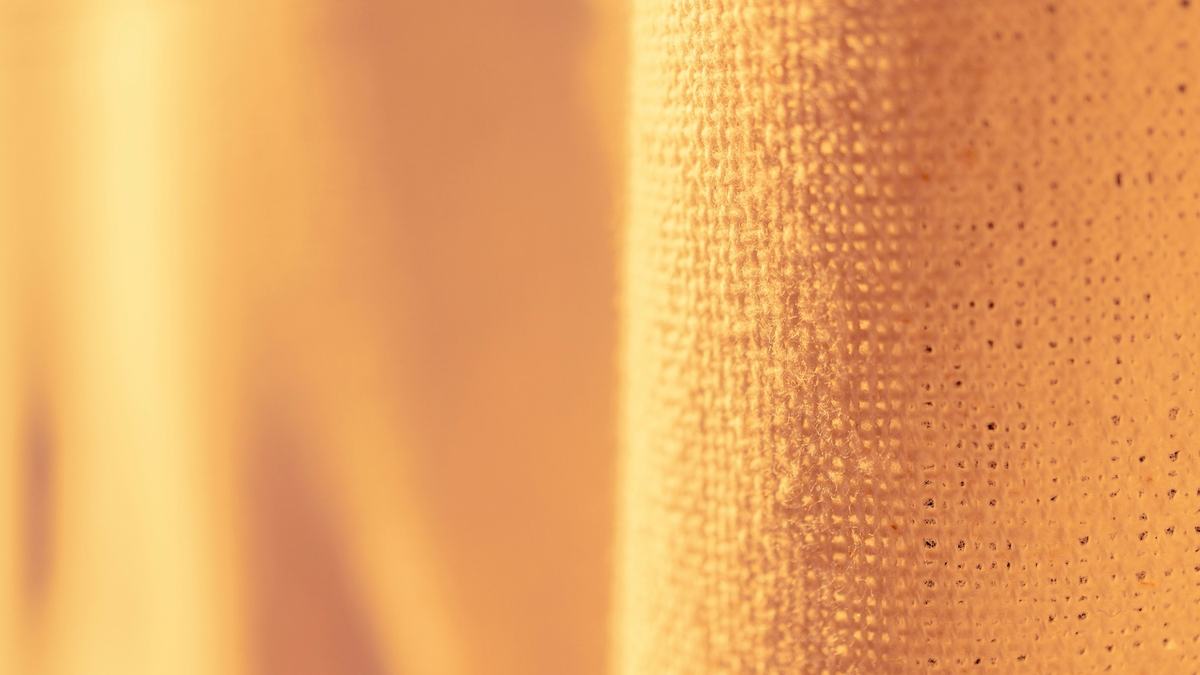
Fiber derived from the outer area of the plant’s stalk, or bast, is strong and durable. (Photo by Se. Tsuchiya on Unsplash)
The group sees great potential in fiber hemp and is focused on developing a viable commercial supply chain where hemp can be grown on North Carolina farms and turned into clothing, furniture and other products.
Conference Builds Industry-University Collaboration
In August, key players in the burgeoning fiber hemp industry — from farmers to researchers to textile and fabric experts — came together for the Discover NC Textile Hemp Conference. The two-day meeting began with a seminar at the Wilson College of Textiles and ended with tours of both hemp research plots and a factory that converts hemp into fiber that can be spun into yarn.
A key takeaway from the event: Commercializing textile hemp presents systems challenges, but it can be done. Each step of the value chain must be optimized and strengthened to achieve success.
As alternative crops specialist with NC State Extension, David Suchoff is bullish on the potential for hemp, both as a crop and a textile product. But the challenges must be addressed for successful commercialization, he said.
The Challenge: Getting Processing Infrastructure in Place
“Right now, the main challenge for fiber hemp is to get the entire processing infrastructure in place. That is the limiting factor to successful commercialization,” said Suchoff, who also serves as an NC State associate professor of crop and soil sciences and Extension outreach and engagement platform director for the N.C. Plant Sciences Initiative.
“In terms of the agronomics, we know how to grow the crop and optimize our production practices to produce quality fiber hemp. The next step is having those consistent purchasers and end-use manufacturers that are buying the material, processing it and bringing products to market,” he adds. “We are moving in the right direction. A lot of key players are starting to get involved. The processing infrastructure is coming online. It may be a little slower than some folks want, but there is something to be said about a slower but safer pace, rather than have everybody jumping right in like we saw with cannabidiol, or CBD, and it just collapses.”
Demand seems to be clearer and more long-term for textile hemp.
"The beauty of textile hemp is it has multiple broad applications, from clothing to furniture, nonwovens and more."
“One of the issues we saw with CBD was we didn’t really understand what the demand was. The demand just really wasn’t there. The beauty of textile hemp is it has multiple broad applications, from clothing to furniture, nonwovens and more,” Suchoff said.
Accelerating Commercialization for the U.S. Market
In comments at the NC State hemp conference, Anne Wiper, the Textile Innovation Engine’s chief executive officer, said the mission is to accelerate the commercialization of textile quality hemp for the U.S. market.
The goal is to connect supply with demand, derisk the investment by filling critical gaps with science and technology, tell the story of natural performance textiles, foster research and development, build globally accepted standards for process and materials, and facilitate the development of key infrastructure, Wiper added.
“We know this can be achieved by bringing people together, and it’s by working to identify where are all the gaps. There are plenty of them when you are trying to build a whole new value chain. The only way we are going to do it is by working together,” she said.
Rick Brown is a fourth-generation farmer who runs Brown Family Farms in Warren County, North Carolina. Brown and his family began growing cannabinoid hemp in 2016, but as demand for CBD dropped, the family transitioned to growing fiber hemp for BioPhil Natural Fibers in Lumberton, beginning in 2019.

Rick Brown produces fiber hemp for a Lumberton company, BioPhil Natural Fibers. He finds hemp a good crop to rotate with corn and soybeans, restoring the soil and suppressing weeds.
Brown said he likes the soil remediation value of hemp on his farm. He said there is less reliance on synthetic fertilizers and herbicides, and hemp has proven to be a good rotational crop with corn and soybeans that his family also grows.
“We are able to sequester carbon, build microbial fungi in our soil and suppress the weeds without having to use herbicides. Industrial hemp is the crop that helped by incorporating it into a proper crop rotation. We are able to plant hemp and corn at the same time. By rotating hemp with soybeans, it opens up a rotation option for North Carolina farmers,” Brown said.
Well-Suited Crop for North Carolina
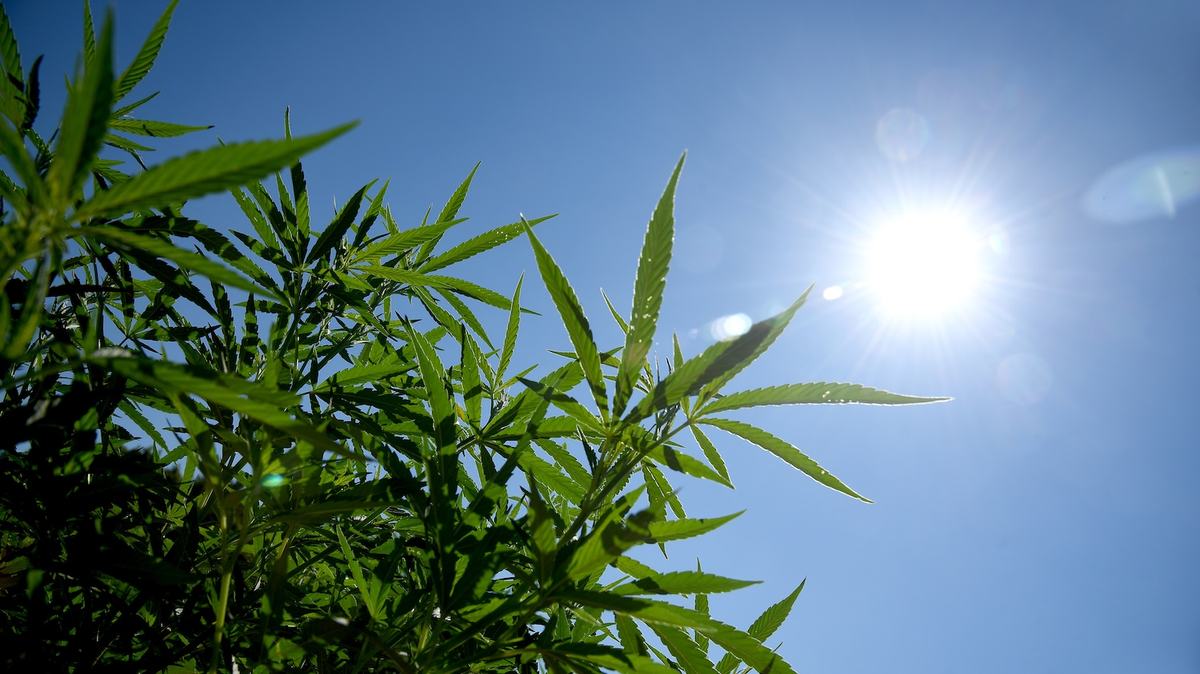
Hemp requires few inputs such as fertilizers and pesticides, and while not drought resistant, it stood up well to this year’s drought in Suchoff’s North Carolina trials.
Suchoff said hemp is well-suited to North Carolina. He and his team are researching the crop with trials at the Cherry Research Station in Goldsboro, the Caswell Research Station in Kinston and on North Carolina farms. The hemp conference participants saw firsthand the research work at the Cherry station.
"It’s really a matter of planting it, putting out your fertilizer and herbicides and coming later into the season to cut it."
“On the whole, hemp is an easy crop to grow. It is a low-input crop. We only need to put out a little bit of fertilizer and a little bit of herbicide. We don’t have any — knock on wood — big diseases or insect pressures that attack the crop. I think that is because we are harvesting it before it flowers,” Suchoff said.
“It’s really a matter of planting it, putting out your fertilizer and herbicides and coming later into the season to cut it. It doesn’t appear to be a very thirsty crop either.
“It’s not a drought-resistant crop,” he added. “But it certainly appears to be drought tolerant in that it can stand some very dry conditions, which is going to slow down the growth a little, but it’s still going to be able to keep going. It’s still going to be able to produce a viable crop.”
Separating Bast From Hurd
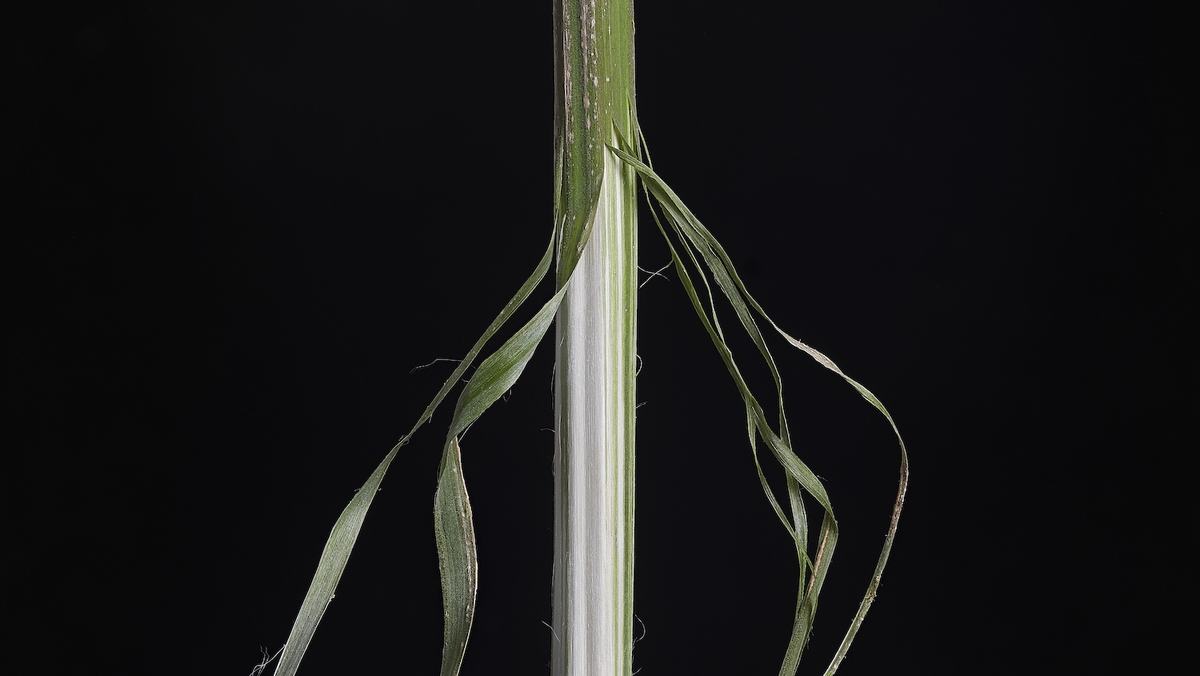
A stem of a hemp plant with the outer bast peeled back to expose the hurd inside. The blast is used for fiber, and the hurd is used for construction materials, animal bedding, gardening mulch and industrial absorbents.
Once the hemp is harvested, the bast and hurd fibers from the plant stalks are separated. Bast fibers are found in the outer part of the stem, between the epidermis, or outer bark, and the woody core, known as the hurd.
At the BioPhil plant in Lumberton, hemp summit participants saw a hemp processing line that produces both commercial-quality bast, which is sold for textile processing, and hurd, sold for construction materials, animal bedding, gardening mulch and industrial absorbents.
Marcel Dabdoub, BioPhil’s CEO, said the next goal is to turn hemp fiber into blended yarn.
“The goal is to produce a high-performance hemp-cotton blend of yarn to make it easy to replace synthetic fibers with sustainable natural fibers. That could mean pretty much any combination between a 60% cotton /40 % hemp blend to 90% cotton/10% hemp blend,” Dabdoub said.
Alisha Spradlin, spinning lab manager and extension faculty at the Wilson College of Textiles, said her lab looks for three things when spinning fiber hemp into yarn. The first thing she wants is clean fiber, where there is no hurd mixed in with the bast. If hurd remains, processing problems can occur.
“It tells me that the fiber hasn’t been properly cleaned so that also means that it hasn’t been properly decorticated,” or untangled, she said.
“Those fibers are not separated as readily as they should be, so when it’s going through the carding system, or it’s going through the drawing system, those fibers aren’t actually working together on an individual basis,” she explained.
The second key is fiber fineness. Spradlin said it is important to remember that hemp is not cotton and that cotton is not hemp, even though hemp is often run through a cotton system to make yarn. She said the fineness of cotton is ideal for spinning, whereas hemp is naturally stiffer and coarser than cotton and can have greater variability.
“We’re going to have to do the hard work across all of our groups to be able to make this whole system work.”
“The last thing I look for is the uniformity of length. Ideally with any fibers you are working with, you want your fibers to be as similar and uniform in length as possible. That way they can interact with one another through all those mechanical processes as evenly as possible,” Spradlin said.
A clear takeaway from the Discover NC Textile Hemp summit was that hemp has clear potential as a valuable textile fiber, but the challenge is producing fiber that can meet the expectations of brands and their customers. Wiper said the Textile Innovation Engine is working to identify and solve barriers preventing commercialization.
“We’re going to have to do the hard work across all of our groups to be able to make this whole system work,” she said.
—John Hart
More About Hemp:
Contributors