The thought of speaking in front of people can cause some of us to break out in a cold sweat. Now imagine entertaining the group with a story or humor improvised on the spot.
Angela Galloway, 4-H agent in Scotland County, knows the feeling from performing at area improv clubs. It can be intimidating, but the challenge of overcoming anxiety and being instantly creative is overwhelmingly positive. So much so that she incorporates it into her youth development work.
“I’ve done an improv program project at four middle and elementary schools,” she says. “Kids who were shy, quiet, nervous getting up in front of people, by the end of the class they're laughing, they're loud, they're participating. Their confidence is different.”
When school returned in the fall, Galloway launched a 4-H improv program.
“It builds confidence, builds self-esteem,” she says. “I see this project being an amazing fit in Scotland County, really all over.”
An improv program might seem like an odd choice for a traditional 4-H club, but it’s perfect as a special interest (spin) club.
4-H is NC State Extension’s youth development program. Traditional clubs last for a semester or year, and are typically focused on livestock, agriculture and environmental stewardship, healthy living, science and technology, and community involvement.
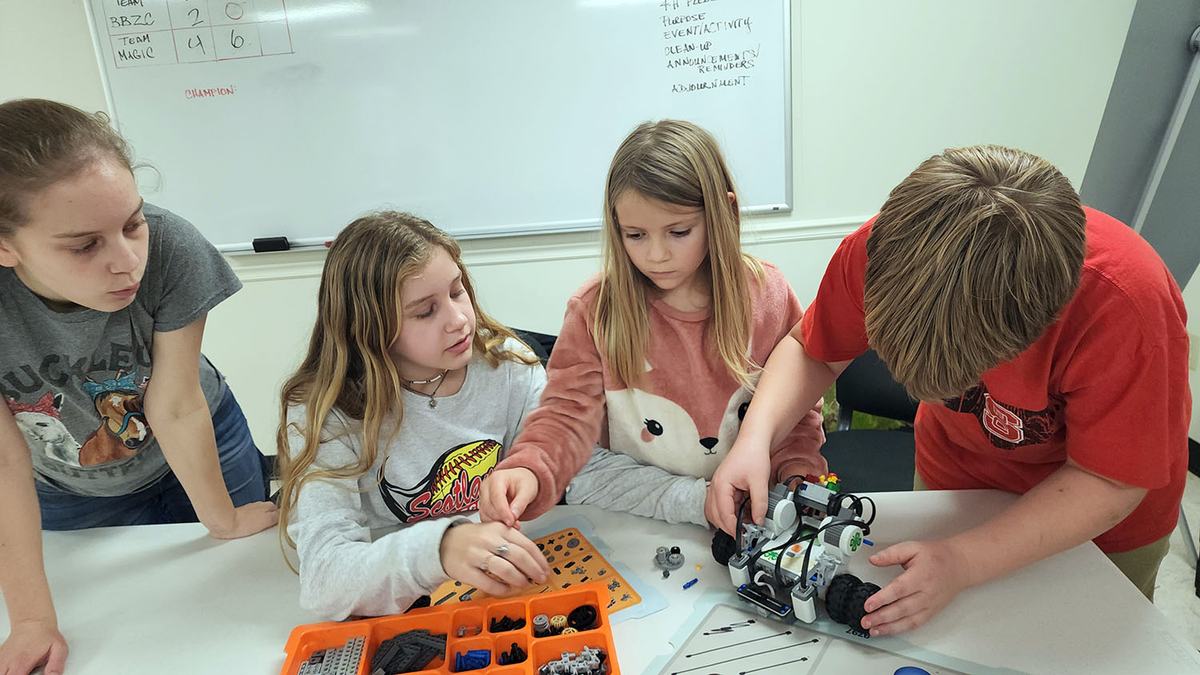
4-H'ers participate in a spin club in Scotland County.
Spin clubs cover several topics in six months instead of just one. They are designed to introduce topics, gauge interest for potential longer-term clubs, and recruit new members.
“Parents see it as a short-term commitment. Kids see it as an opportunity to try something new. And it is a great way to expose the community to the other areas of 4-H,” says Nicki Carpenter, 4-H agent in Burke County.
Carpenter has offered short-term clubs in sewing, culinary creations and creative arts. She has created clubs for teenagers and for cloverbuds (K-3rd grade).
“When you can expose them to more hands-on opportunities to see what they're good at and what they like, it opens doors to pursue interests and strengths that may even lead them in different career and college paths,” Carpenter says.
“Spin clubs are a great tool to introduce 4-H to the nontraditional audiences, those kids who really don't know what it is,” Starkes says. “I've done everything from robotics to mindfulness. I've even done a crochet and knitting club.”
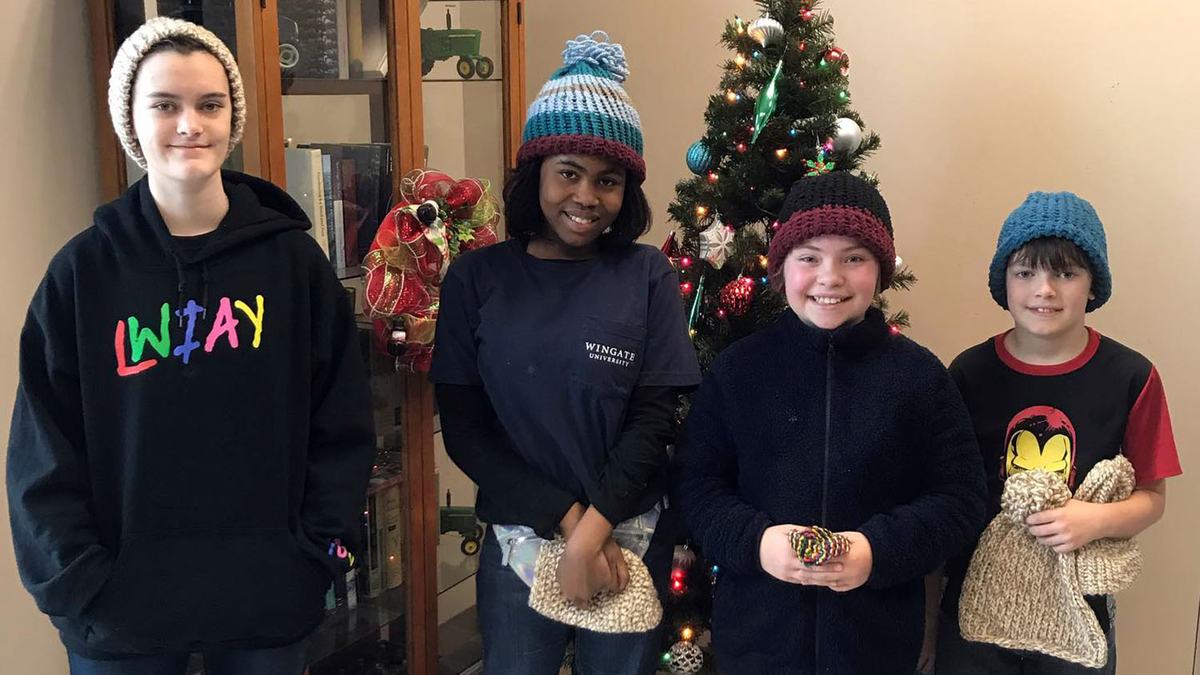
Sometimes spin clubs evolve into traditional clubs. That’s what happened with Union County’s robotics and knitting and crocheting clubs.
4-H participants in Union County wear caps they created during a crochet and knitting spin club.
Jessica Hamilton, 4-H agent in Wayne County, has been doing spin clubs for a couple of years. She has offered short-term programs about agriculture, robotics, sewing, food nutrition, information technology and beekeeping.
“We get ideas based on what kids are interested in or what we feel they need to learn more about or if we have a volunteer who has a passion for something,” Hamilton says. “We try to work with them and make it happen.”
Wayne County is home to Seymour Johnson Air Force Base. Short-term spin clubs can appeal to children of service members.
“Sometimes some of our kids who get super involved are also on the base and they might get moved,” Hamilton says. “They like this nontraditional club aspect because they don't feel like they're committing to something and then giving up on it.”
Regardless of the reason for joining a spin club, young people who participate gain the same positive experiences as those in long-term clubs.
“The 4-H slogan is to learn by doing and they are definitely learning through this process,” Galloway says.