RT @NCAgriculture: NC's fire ant quarantine now affects 70 counties. News release: [more] • • • How do consumers react to product recalls? #NCSU economist Mike Walden explains: [more] • • • Mulch is the first line of defense against annual weeds in landscape beds, and now's a good time to add it. [more]
The College of Agriculture and Life Sciences at North Carolina State University announces a two-year program designed to develop the leadership skills of up to 30 young agriculturists who exhibit considerable leadership potential. The participants would be representative of all agriculture and related agribusiness in North Carolina.MORE
In North Carolina, many different species of fish ranging from crawfish, catfish, and trout to yellow perch are produced. Find information about the species commonly produced in North Carolina, information on starting an aquaculture operation of your own, suppliers and many informative publications.MORE
Being prepared for a disaster is the best way to minimize losses and recovery time.
North Carolina Cooperative Extension is a provider of research-based, educational materials to help individuals, families, communities and businesses. Each year, millions of people are affected by natural disasters and their consequences. This information has been produced to offer assistance in dealing with natural disasters.MORE
The Center for Environmental Farming Systems develops and promotes food and farming systems that protect the environment, strengthen local communities, and provide economic opportunities in North Carolina and beyond. Located at the Cherry Research Farm near Goldsboro, CEFS began its sustainable agriculture programming in 1996. Today, CEFS is one of the nation's largest centers for the study of environmentally sustainable farming practices.MORE
The Department of Horticultural Science at NC State University has a wide range of materials online for helping the gardening public. This site contains materials developed by the department and links to other related information from all around the country.MORE
The H1N1 flu virus is a new influenza A virus that has not been identified in people before, and human-to-human transmission of the virus is ongoing.
Your best defense against the flu is to wash your hands. Try to stay in good general health. Get plenty of sleep, be physically active, manage your stress, drink plenty of fluids, and eat nutritious food.
It is important to keep updated on current recommendations and risk assessment as more is learned about the current outbreak of H1N1 flu.MORE
The mission of the Design Research and Extension Program is to link the resources of the College of Design with the needs of communities throughout the state and the world.MORE
Our vision is very simple, to be the most entrepreneurial university, anywhere. We are committed to nurturing the creative spirits of our innovators, continually increasing our capacity for discovery and leading innovations into actions.MORE
eXtension.org is unlike any other search engine or information-based Web site. It's a space where university content providers gather and produce new educational and information resources on wide-ranging topics. Because it's available to students, researchers, clinicians, professors, as well as the general public, at any time from any Internet connection, eXtension helps solve real-life problems in real time.MORE
Whether it's moles in the lawn, squirrels in the attic, or coyotes terrorizing a neighborhood, consumers now have instant access to research-based solutions for helping humans and wildlife coexist--managing problems caused by wildlife through an online resource dedicated to linking people who need information with the experts who have this information.
The eXtension Wildlife Damage Management Web site puts a wealth of information directly on consumers' computer screens. It's an excellent resource for anyone needing information about managing wildlife problems.MORE
Extensión en Español is a grass roots organization of Extension educators which seeks to better serve Spanish-speaking clients by sharing expertise and materials across the Cooperative Extension System.MORE
eXtension's Horses community provides reliable and up-to-date horse information through a knowledge base of commonly asked questions that have science-based, peer-reviewed answers. In addition, online lessons use self-paced learning objects to help you learn more about specialized areas of equine science.MORE
Extension programs in Environmental Toxicology address toxicological issues related to environmental quality and health. Primary areas of focus include water quality; environmental contaminants and food safety; endangered species; ecological risk assessment; and chemical hazards in households such as lead.MORE
Fall armyworms have been found in eastern North Carolina and this is as early as they have ever been found. They do not overwinter here, so they are getting a big head start and may be a real problem this year. All turf locations including golf courses, home lawns, sod farms, newly-laid sod, and about anywhere there is green turfgrass are at risk.MORE
Financial security, the ability to meet day-to-day expenses while saving and investing for tomorrow, is a lifelong goal for most individuals and families. The national Financial Security for All team, lead by eight Extension professionals from across the country began collaborative work to provide consumers a source of reliable and up-to-date financial and consumer information through a knowledge base of commonly asked questions that have science-based, peer reviewed answers.MORE
This program provides you with research-based information that you can use to help you make healthful changes in your eating and exercise habits designed to help prevent cardiovascular disease.MORE
goCyberCamp is a place where kids explore the dynamics of nature and art and science. It's online fun and learning from anywhere at anytime! goCyberCamp is a place for kids and camp counselors only. So, it's a safe place for kids online!MORE
Green 'N' Growing is a resource-based research and educational web site developed by the Special Collections Research Center at the North Carolina State University Libraries. The collection provides valuable information about women, children, race relations, education, agriculture, and rural life in North Carolina during the twentieth century as it documents the history of 4-H and Home Demonstration in North Carolina from the 1900s to the 1970s.MORE
North Carolina's "Art Roads & Farm Trails" are featured in a unique web-based trail system, HomegrownHandmade.com, that combines agritourism and cultural tourism. Extension's associate director Dr. Joe Zublena said recently, "In building tourism trails, Extension and its partners worked hard to find existing and new enterprises that would help create exciting opportunities for travelers to experience the people, culture and heritage of our communities.MORE
* Cover your nose and mouth with a tissue when you cough or sneeze. Throw the tissue in the trash after you use it.
* Wash your hands often with soap and water, especially after you cough or sneeze.
* Avoid touching your eyes, nose or mouth. Germs spread this way.
* Try to avoid close contact with sick people.
* If you are sick with flu-like illness, CDC recommends that you stay home for at least 24 hours after your fever is gone except to get medical care or for other necessities.MORE
Using everything from switchgrass to agricultural waste, scientists in NC State University's College of Agriculture and Life Sciences are developing ways to convert biomass into clean-burning alternative fuels. The college plays a key role in the state's Strategic Plan for Biofuels Leadership, with a new demonstration farm in Duplin County and a pilot processing plant under development in Raleigh.MORE
From the mountains to the coast, N.C. State University College of Agriculture and Life Sciences scientists and educators are working to help North Carolinians cope with the drought. Read more about the College's Drought Response (PDF)or browse this page to find helpful tips for homes and gardens.MORE
4-H'ers don't want to dream about the future.They want
to create it. Right now. Like a 4-H project in robotics that
sparked the imagination of a young girl and inspired a
passion for science. With that passion, she went on to
create new designs and new sources of energy to power
a growing world.
4-H is growing the next generation of great thinkers.
To learn more about North Carolina's largest youth
development organization, visit out web site.MORE
North Carolina Cooperative Extension has created a new web site that offers free fact sheets on topics of interest to the many North Carolina families currently dealing with economic hardship. The fact sheets offer unbiased, researched based information on topics ranging from how to tell your family you've lost your job, to getting the best buy at the grocery store, to tips on preventing home foreclosure.MORE
The Natural Resources Leadership Institute (NRLI) is dedicated to educating and supporting North Carolinians who are committed to seeking consensus on issues affecting the sustainable development of North Carolina's natural resources and the quality of our environment. Located at NC State University since 1994, NRLI began with its leadership development program for natural resources and environmental leaders. Nearly 390 leaders have participated in the institute. NRLI also works with communities, and local, state, and federal agencies and organizations to find collaborative solutions to our environmental issues.MORE
The North Carolina Drought Management Advisory Council is organized to coordinate activities of state agencies in the assessment and the response to drought and activates the Drought Assessment and Response Plan, a part of the North Carolina Emergency Operations Plan.MORE
The N.C. MarketReady program helps build partnerships and educational resources to help North Carolina agriculture be more profitable.
This program develops and delivers educational programs and information resources that help farmers be successful in areas of Agriculture Enterprise Development, Business Skills Education, Fresh Produce Safety, Horticulture Skills Education, and Strengthening Markets.
The North Carolina State University N.C. MarketReady program is part of the College of Agriculture and Life Sciences (CALS) and N.C. Cooperative Extension.MORE
The State Advisory Council advocates for the citizens of North Carolina with government and community leaders, promotes excellence by sharing the impact of North Carolina Cooperative Extension programs, ensures that Cooperative Extension programming meets local needs and serves as a liaison between local Extension and state administrators.MORE
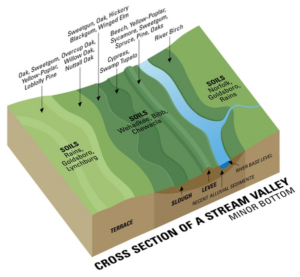
The Goal of the NC State University Stream Restoration Program is to improve water quality and aquatic ecology through research, demonstration projects, and education of the public.
Stream restoration is the re-establishment of the general structure, function and self-sustaining behavior of the stream system that existed prior to disturbance. It is a holistic process that requires an understanding of all physical and biological components of the stream system and its watershed.MORE
It is the rare news article about the North Carolina economy that does not include a quote from Dr. Mike Walden, William Neal Reynolds professor and Cooperative Extension economist. Dr. Mike Walden's annual evaluation of North Carolina agriculture and agribusiness is now available. That assessment shows that agriculture and agribusiness continue to be important parts of the state's economy, accounting for $70.l billion of N.C.'s $399 billion gross state product.MORE
The North Carolina Pesticide Safety Education Program's mission is to promote the responsible use of pesticides through educational resources and training.MORE
Extension programs address human health and safety for pesticide applicators, agricultural workers, and their families. Training workshops and seminars are generally provided to over 400 individuals participating in county-organized pesticide training classes each year. Publications on pesticides and human health are available in Spanish and English to provide health and safety information to migrant and seasonal workers, growers, agricultural agents, and health care providers.MORE
Over 4000 fact sheets on specific plants including images, cultivars, and cultural information can be found on this site. Find out about annual flowers, perennial flowers, summer and fall flowering bulbs and plants to attract birds and butterflies. This site also contains information on trees, grasses and almost any kind of plant that you can imagine.MORE
Plant Pathology Extension seeks to reduce economic losses from plant diseases by providing the link between research and its application in the field. Extension faculty develop integrated disease management programs based on the latest research, diagnose plant diseases, and provide educational materials to commercial growersMORE
The Department of Entomology has extensive information on Residential, Structural and Community Pests. From health issues to structural issues to storm-related pest issues, you can find it all here.MORE
In North Carolina, most soils are acidic and low in nutrients. Good plant growth usually requires the addition of lime and fertilizer. Soil testing is the best way to find out how much to apply.
The North Carolina Department of Agriculture offers soil testing and information for both commercial growers and home owners. Soil samples are usually analyzed within about a week, but may take longer from late fall through early spring due to heavy loads from farmers at this time.
Results of the tests are posted on an online system and also mailed to the client.MORE
When a question about strawberries comes to mind, one stop at the recently launched Strawberry Growers Information Portal will provide the answer. The Strawberry Growers Information Portal was developed to bring together on one Web site all the resources pertaining to business management and production of strawberries in North Carolina.MORE
Where picturesque oaks once stood, tens of thousands of ashen gray trees dot the hillsides along the northern California coast, victims of a disease called Sudden Oak Death. An unsettling reminder of what could happen in the southern Appalachian forests if the organism that causes Sudden Oak Death is introduced.MORE
Tourism Extension at NC State University is proud to announce the launch of their new website! The site is designed to benefit NC Cooperative Extension Agents and other professionals working throughout North Carolina. The purpose of the website is to provide useful information on a variety of tourism-related topics, to identify additional resources, and to provide a forum to share current news and information related to tourism and extension within North Carolina and beyond. Be sure to visit often as new information and resources will be added on a regular basis.MORE
The JC Raulston Arboretum is a nationally acclaimed garden with the most diverse collection of plants adapted for landscape use in the southeastern United States. Plants especially adapted to Piedmont North Carolina conditions are collected and evaluated in an effort to find superior plants for use in southern landscapes.MORE
The Watershed Education for Communties and Local Officials (WECO) program is dedicated to facilitating watershed planning at the local level in North Carolina. A program of the North Carolina Cooperative Extension Service, WECO brings watershed stakeholders together to find collaborative solutions to water quality problems in their watershed.MORE
NC Cooperative Extension is based at North Carolina's two land-grant institutions, NC State University and NC A&T State University, in all 100 counties and on the Cherokee Reservation.